Pay in installments of $6.04 with
 ,
,
 and
and

Shipping Estimate
USA
- USA
- CAN
- USA
- CAN
Ships within 48 hours · Estimated delivery Jul 5 - Jul 10
 Promo Codes Available:
For Your Every Summer RSVP, with Code: SUMMER15
Description
pot for aloe plant Buy Cape Aloe Phoenix, AZ | Aloe feroxPhoenix's Most Dramatic Landscape Aloe Bold Color, Zero Fuss The Cape Aloe (Aloe ferox) is one of the most visually striking succulents you can plant in the Phoenix Valley. Growing 69 feet tall with a dense rosette of thick, blue green leaves edged in reddish brown spines, this South African native delivers bold architectural impact with almost no maintenance. It thrives in Arizona's extreme heat, laughs off drought, and rewards you with towering
Phoenix's Most Dramatic Landscape Aloe — Bold Color, Zero Fuss
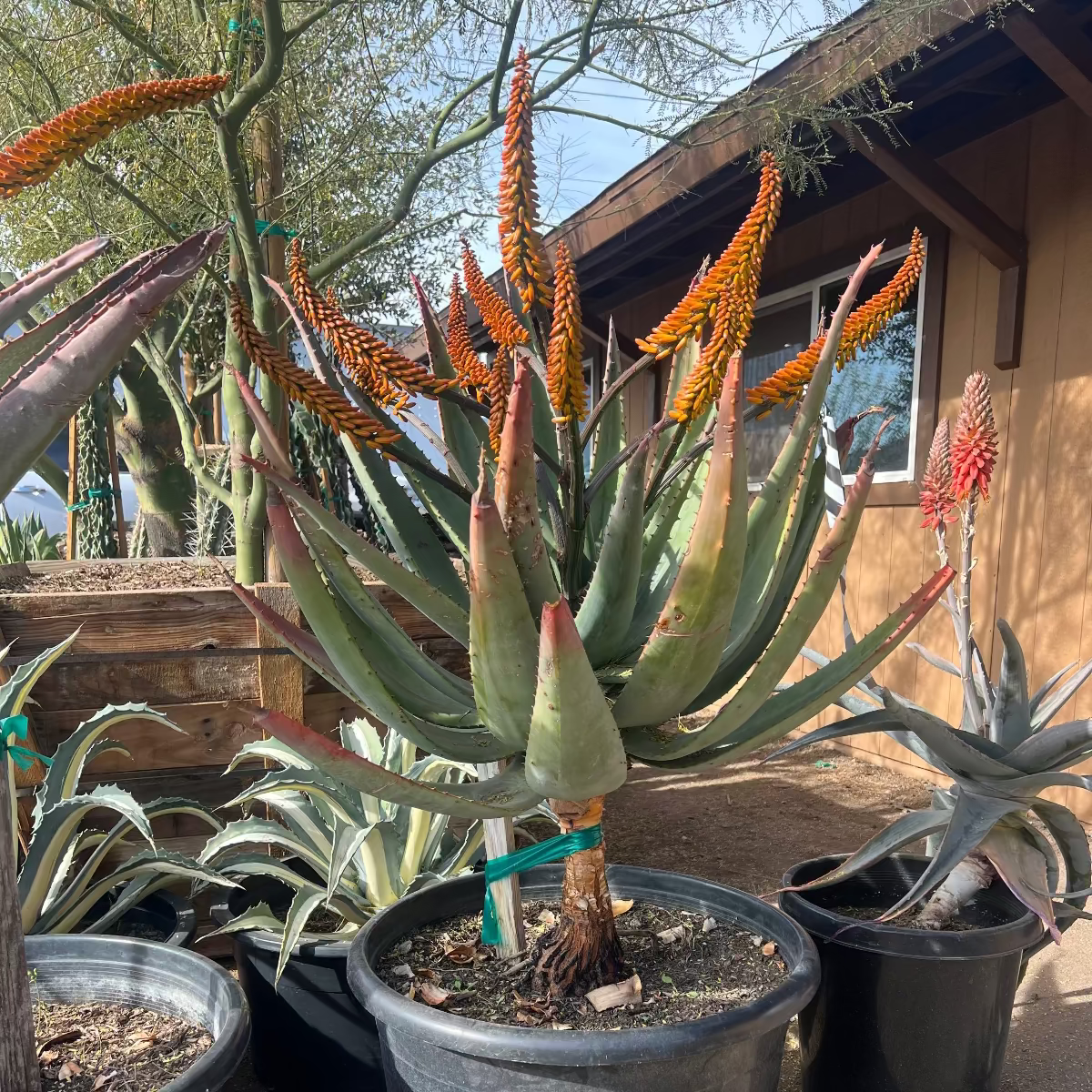
The Cape Aloe (Aloe ferox) is one of the most visually striking succulents you can plant in the Phoenix Valley. Growing 6–9 feet tall with a dense rosette of thick, blue-green leaves edged in reddish-brown spines, this South African native delivers bold architectural impact with almost no maintenance. It thrives in Arizona's extreme heat, laughs off drought, and rewards you with towering spikes of bright orange-red flowers in winter — right when most desert gardens need color the most. Whether you're anchoring a modern xeriscape in Scottsdale, creating a dramatic focal point in a Chandler courtyard, or lining a Tempe driveway with sculptural succulents — Cape Aloe gets the job done.
Cape Aloe Plant Details
| Attribute | Detail |
|---|---|
| Scientific Name | Aloe ferox |
| Common Names | Cape Aloe, Bitter Aloe, Red Aloe |
| Mature Height | 6–9 feet |
| Mature Width | 3–5 feet |
| Growth Rate | Moderate — 1–2 feet per year in Phoenix once established |
| Sun | Full sun to partial shade. Handles reflected heat from walls. |
| Water | Very low once established. Highly drought-tolerant. |
| USDA Zones | 9–11 (Phoenix is Zone 9b–10a) |
| Soil | Well-draining. Adapts to Arizona caliche soils with good drainage. |
| Foliage | Evergreen — stays green year-round |
| Bloom Color | Bright orange-red flower spikes, winter to early spring |
Cape Aloe Uses in Phoenix Landscapes
Dramatic Focal Point
Cape Aloe's tall, tree-like form and spiny rosette make it an instant conversation piece. Plant a single specimen in a gravel bed or raised planter where its sculptural silhouette can shine. Pair it with low-growing groundcovers like Ruellia or trailing lantana for a layered desert look that's popular in Scottsdale and Paradise Valley.
Modern Desert & Xeriscape Design
The bold architectural lines of Cape Aloe fit perfectly in contemporary desert landscapes. Use it alongside other structural plants like Totem Pole Cactus, Mexican Fence Post, and Blue Glow Agave to create a clean, high-impact design with almost zero irrigation needs. This combination is a favorite for Mesa and Gilbert new-builds.
Winter Color Garden
While most Phoenix gardens go quiet in winter, Cape Aloe sends up towering orange-red flower spikes that attract hummingbirds and add dramatic color from December through March. Mass-plant 3–5 specimens along a south-facing wall in Peoria or Glendale for a stunning seasonal display.
Best Time to Plant Cape Aloe in Phoenix
Fall (October–November) is the ideal planting window. The soil is still warm enough to encourage root growth, while cooler air temperatures reduce transplant stress. This gives your Cape Aloe 6–8 months of root establishment before its first Phoenix summer. Spring (February–April) is the second-best window. Avoid planting in the peak summer months if possible.
How to Plant Cape Aloe
- Dig wide, not deep — 2–3x the root ball width, same depth as the container.
- Check for caliche — break through any hardpan layer to ensure drainage. Cape Aloe will rot in standing water.
- Backfill with native soil — a light 20% pumice or perlite blend improves drainage in heavy clay.
- Spacing — 4–5 feet apart for a grouped planting; 6+ feet for individual specimens.
- Water basin — build a 3–4 inch ring around the root zone to direct water to the roots.
- Mulch — 2–3 inches of gravel or decomposed granite. Avoid organic mulch directly against the stem.
Watering Cape Aloe in Phoenix
First Year Watering Schedule
Weeks 1–2: Every 2–3 days, deep and slow (15–20 min). Month 1–2: Every 5–7 days. Month 3–6: Every 10–14 days. After Year 1: Every 2–3 weeks in summer; monthly or less in winter. Cape Aloe stores water in its thick leaves and is extremely drought-tolerant once roots are established.
Drip Irrigation
Place one 2 GPH emitter 12–18 inches from the trunk. Established Cape Aloe plants need very little supplemental water — overwatering is a bigger risk than underwatering in Phoenix.
How fast does Cape Aloe grow in Phoenix?
Cape Aloe grows at a moderate pace — about 1–2 feet per year once established. A 5-gallon plant can reach 4–5 feet within 2–3 years in a full-sun Phoenix location with good drainage.
Is Cape Aloe frost-tolerant?
Cape Aloe handles brief dips to 25°F, which covers Phoenix's rare winter freezes. In Fountain Hills or higher elevations, plant near a south-facing wall for extra radiant heat protection.
Does Cape Aloe work near pools?
Yes, with caveats — the spiny leaves can be sharp, so plant it at least 4–5 feet back from pool edges and walkways. The upright growth habit means minimal leaf litter compared to trees.
What's the difference between Cape Aloe and Aloe vera?
Cape Aloe (Aloe ferox) grows much larger — up to 9 feet vs. Aloe vera's 1–2 feet — and has a thick trunk with dramatic spiny rosettes. Both have medicinal properties, but Cape Aloe is the far better landscape plant for Phoenix-scale gardens.
Does Cape Aloe attract hummingbirds?
Absolutely. The bright orange-red winter flower spikes are a top hummingbird magnet in the Phoenix Valley. Planting Cape Aloe near a window or patio gives you a front-row seat to the action.
You May Also Like
Blue Glow Agave — A compact, glowing blue rosette that pairs beautifully with Cape Aloe in modern desert plantings.
Safari Yellow Aloe — A smaller aloe with vibrant yellow blooms, perfect for layering in front of Cape Aloe.
Malagasy Tree Aloe — Another tree-form aloe with branching trunks and coral-red flowers for a tropical desert look.
Totem Pole Major — A smooth, columnar cactus that contrasts perfectly with the spiny rosette of Cape Aloe.
Queen Victoria Agave — A tight, geometric rosette with white markings — stunning as an accent alongside Cape Aloe.
How Many Cape Aloe Do I Need?
Cape Aloe is a tall, spiny specimen aloe (3 to 5 ft wide at maturity). It shows best as a single architectural focal point or in odd-numbered groups of 3 to 5 plants spaced 4 to 5 ft apart so each rosette and flower spike stands clear. Because the leaf margins carry sharp reddish teeth, hold it back at least 4 to 5 ft from walkways, patios, and pool edges. For a bold defensive run along a back wall or property line, use the spacing guide below.
| Run Length | Plants Needed (at 4.5 ft spacing) |
|---|---|
| 10 ft | 3 plants |
| 20 ft | 5 plants |
| 30 ft | 7 plants |
| 40 ft | 9 plants |
Cape Aloe Season-by-Season in Phoenix
- Spring (Feb to Apr): Tail end of the orange-red bloom spikes fades as hummingbirds work the last flowers. New leaf growth pushes from the center. A strong second planting window once nights stay above the mid-40s.
- Summer (May to Sep): Built for it. Cape Aloe takes full Phoenix sun and reflected heat off block walls without flinching. Monsoon humidity is no problem as long as the soil drains fast. Cut supplemental water to every 2 to 3 weeks to avoid rot.
- Fall (Oct to Nov): Prime planting season. Warm soil and cooling air let roots establish before winter. Flower spikes begin to emerge from the rosette late in the season.
- Winter (Dec to Jan): The main event. Towering orange-red spikes peak through the coldest months. Evergreen rosette holds its form. Hardy to about 25°F, which covers nearly all Valley winters. In a hard freeze below that, the bloom spikes can scorch, so site it near a south-facing wall in colder pockets like Fountain Hills.
At a Glance
✔ Hummingbird-Friendly ✔ Pollinator-Friendly ✔ Heat-Loving (Reflected-Heat Tolerant) ✔ Drought-Tolerant ✔ Evergreen ✔ Low-Maintenance ✔ Deer & Rabbit-Resistant ✔ Cold-Hardy to 25°F
Plant It With
- Safari Yellow Aloe: a low-growing yellow-flowering aloe that layers in front of Cape Aloe for a two-tier bloom display.
- Malagasy Tree Aloe: another tree-form aloe with branching trunks and coral flowers for a sculptural desert grouping.
- Bottlebrush Aloe: tall winter-blooming spikes that echo Cape Aloe's vertical drama at a complementary scale.
- Desert Spoon: a fine-textured silvery rosette that softens the bold spiny lines of Cape Aloe.
Is Cape Aloe Right for Your Yard?
Cape Aloe thrives in full sun and reflected heat, in fast-draining or caliche soil amended for drainage, where it has 4 to 5 ft of clearance from foot traffic and roughly 25°F or warmer winter lows. It is one of the best low-water winter-color specimens for a Phoenix yard. It is not a fit if you need a soft, child-safe plant right against a walkway or pool deck: the spined leaf margins are sharp, so give this dramatic aloe room to stand on its own.
Shipping Notes
- Free Standard Shipping on $100+ Orders to the USA.
- Except Preorder products are shipped in 48 hours.
- Delivery to the USA:
- Standard Shipping : 3-10 business days
- If time is of the essence, please consider selecting expedited delivery for faster service.
Exchange/Return Notes
- We offer a 30-day return/exchange service after receiving.
- Final sale items are not eligible for returns or exchanges.
- To process your return/exchange, please contact us at [email protected]
- Please click here for more details>>> Return & Exchange Policy