Pay in installments of $5.52 with
 ,
,
 and
and

Shipping Estimate
USA
- USA
- CAN
- USA
- CAN
Ships within 48 hours · Estimated delivery Jul 3 - Jul 8
 Promo Codes Available:
For Your Every Summer RSVP, with Code: SUMMER15
Description
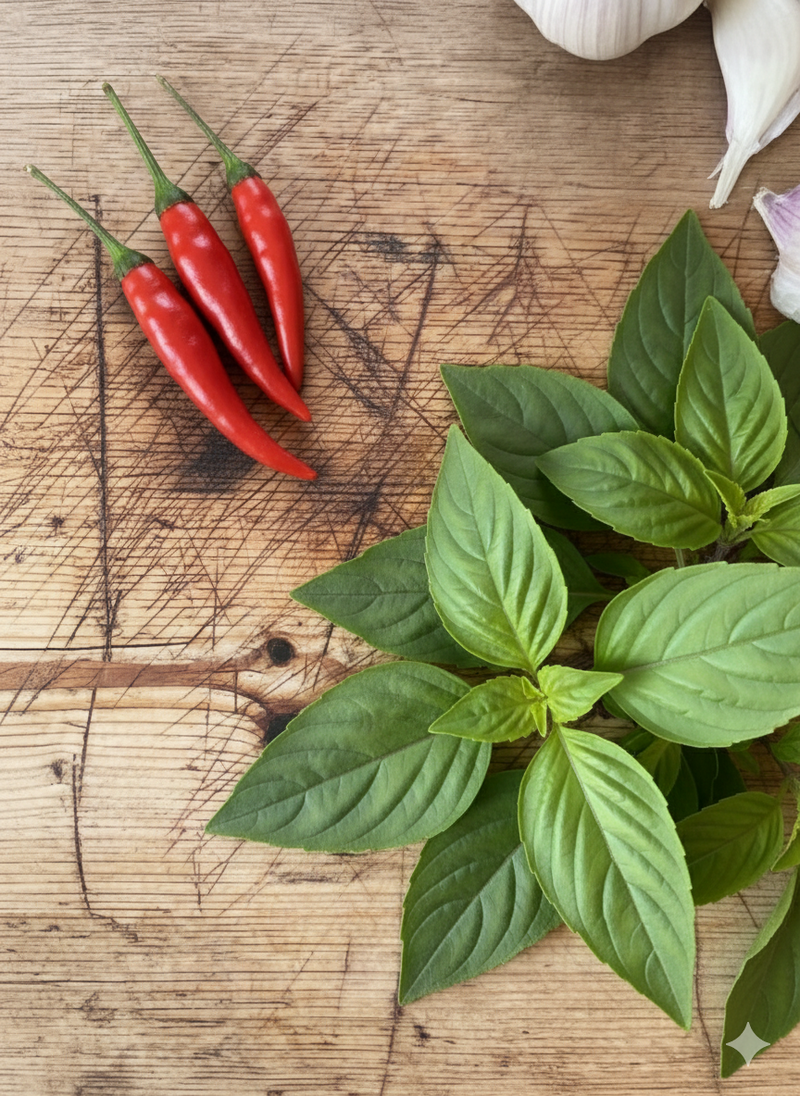
holy basil plant seeds Holy Basil Seeds (Tulsi / Kaprao)Ocimum tenuiflorum Holy Basil (Tulsi Kaprao) the true Pad Kra Pao herb Not the Thai basil sold in supermarkets this is the genuine article. Holy Basil, known as Tulsi across South Asia and Kaprao in Thailand, is Ocimum tenuiflorum: a distinct and special plant, with hairy stems, serrated leaves, small purple flowers, and an intensely peppery, clove forward flavour quite unlike the sweet anise of Italian basil. It's the irreplaceable herb of Thailand's
Ocimum tenuiflorum Holy Basil (Tulsi / Kaprao) — the true Pad Kra Pao herb
Not the Thai basil sold in supermarkets — this is the genuine article. Holy Basil, known as Tulsi across South Asia and Kaprao in Thailand, is Ocimum tenuiflorum: a distinct and special plant, with hairy stems, serrated leaves, small purple flowers, and an intensely peppery, clove-forward flavour quite unlike the sweet anise of Italian basil. It's the irreplaceable herb of Thailand's beloved Pad Kra Pao, and the sacred herb of Ayurvedic tradition, brewed as Tulsi tea across South and Southeast Asia for thousands of years.
Where sweet Genovese basil is gentle and sweet, Holy Basil is bold and spicy. Its flavour comes chiefly from eugenol — the same compound that gives cloves their warmth — together with camphor, producing a peppery, almost hot kick that actually intensifies when cooked. That heat-stable pungency is exactly why it's the basil thrown into a sizzling wok at the last moment for Pad Kra Pao (Thai holy basil stir-fry), rather than stirred raw into a salad. The leaves themselves are structurally tougher and slightly fuzzy — built to withstand the fierce sunlight of their native Southeast Asia.
It carries deep cultural meaning, too. In Hindu tradition Tulsi is revered as the "Queen of Herbs" and a living manifestation of divinity, often grown at the heart of the home and tended as an act of devotion. In Ayurveda it's classified as an adaptogen — one of a small group of plants traditionally used to help the body cope with stress and find balance — and a morning cup of Tulsi tea remains a daily ritual for millions.
Botanically it's a tropical perennial, but in the British climate it's grown as a tender annual — a heat-loving specialist that wants more warmth and humidity than Italian basil to truly flourish. Give it a greenhouse, conservatory, or the sunniest windowsill in the house and it rewards you generously: an upright, branching, aromatic little subshrub of 30–60cm, alive with bees and butterflies when it flowers, and shrugging off the attentions of deer and rabbits.
A note on growing
Sow indoors from March to May. Like all basils, Holy Basil seed needs light to germinate — so scatter it on the surface of moist seed compost and press it in gently rather than burying it; a clear cover or propagator lid helps hold the warmth and humidity it craves. Keep it genuinely warm at 20–25°C, and seedlings will appear within 7–14 days. This is a tropical plant, so it's less forgiving of cool conditions than sweet basil — consistent heat is the single biggest factor in success.
Give bright light the moment the seedlings emerge to keep them sturdy, and prick out into individual pots once they have their first true leaves. Pinch out the growing tips regularly from an early stage to build a bushy, branching plant. Holy Basil resents cold even more than its Italian cousin, so keep it under cover and only consider moving it outside, to the very warmest, most sheltered sunny spot, once the nights are reliably warm in summer — though in most of the UK it's happiest kept in the greenhouse or on a bright windowsill all season.
Water consistently to keep the soil lightly moist but never soggy, ideally in the morning and at the base of the plant to keep the foliage dry. Feed occasionally through the season. Keep picking and keep pinching: harvest the leaves regularly and pinch out flower spikes as they form to prolong leaf production — though you may want to let some flower late in the season, both for the pollinators and to save seed.
Where it shines
In the kitchen, Holy Basil is essential to authentic Thai cooking. Its defining role is Pad Kra Pao — minced chicken, pork, or tofu stir-fried hard with garlic, chilli, and a generous handful of holy basil thrown in at the end, served over rice with a fried egg. Because its peppery clove notes hold up to heat, it belongs in stir-fries, curries, and noodle dishes rather than cold preparations. Beyond the kitchen, the fresh or dried leaves make the celebrated Tulsi tea — warming, aromatic, and traditionally drunk for calm and wellbeing.
In the garden or on the windowsill, it's an attractive, fragrant little plant in its own right, and a genuine magnet for bees and butterflies when allowed to flower — a lovely thing to brush past and release that distinctive spicy-clove scent.
At a glance
- Type: Holy Basil (Tulsi / Kaprao), a tropical perennial grown as a tender annual
- Flavour: peppery and clove-like (eugenol & camphor), intensifies with heat — not sweet like Italian basil
- Plant: upright branching subshrub, 30–60cm, hairy stems and serrated leaves
- Sow: March to May, indoors — surface sow, needs light to germinate
- Germination: 7–14 days at 20–25°C — loves warmth and humidity
- Grow: greenhouse, conservatory or sunny windowsill; needs more heat than Italian basil
- Harvest: summer into autumn — pick regularly, pinch out flowers
- Best for: Pad Kra Pao and Thai stir-fries, curries, and Tulsi tea
Plant alongside
Holy Basil shares its love of heat and sun with chillies, peppers, and tomatoes, making it a natural greenhouse companion — and a culinary one, since chilli and holy basil are partners on the plate as well as the bench. When allowed to flower it draws in bees and butterflies, so it earns its place near any fruiting crop that benefits from pollinators. It also sits happily among other warmth-loving herbs in a sunny container collection by the kitchen door.
Shipping Notes
- Free Standard Shipping on $100+ Orders to the USA.
- Except Preorder products are shipped in 48 hours.
- Delivery to the USA:
- Standard Shipping : 3-10 business days
- If time is of the essence, please consider selecting expedited delivery for faster service.
Exchange/Return Notes
- We offer a 30-day return/exchange service after receiving.
- Final sale items are not eligible for returns or exchanges.
- To process your return/exchange, please contact us at [email protected]
- Please click here for more details>>> Return & Exchange Policy