Pay in installments of $5.05 with
 ,
,
 and
and

Shipping Estimate
USA
- USA
- CAN
- USA
- CAN
Ships within 48 hours · Estimated delivery Jul 5 - Jul 10
 Promo Codes Available:
For Your Every Summer RSVP, with Code: SUMMER15
Description
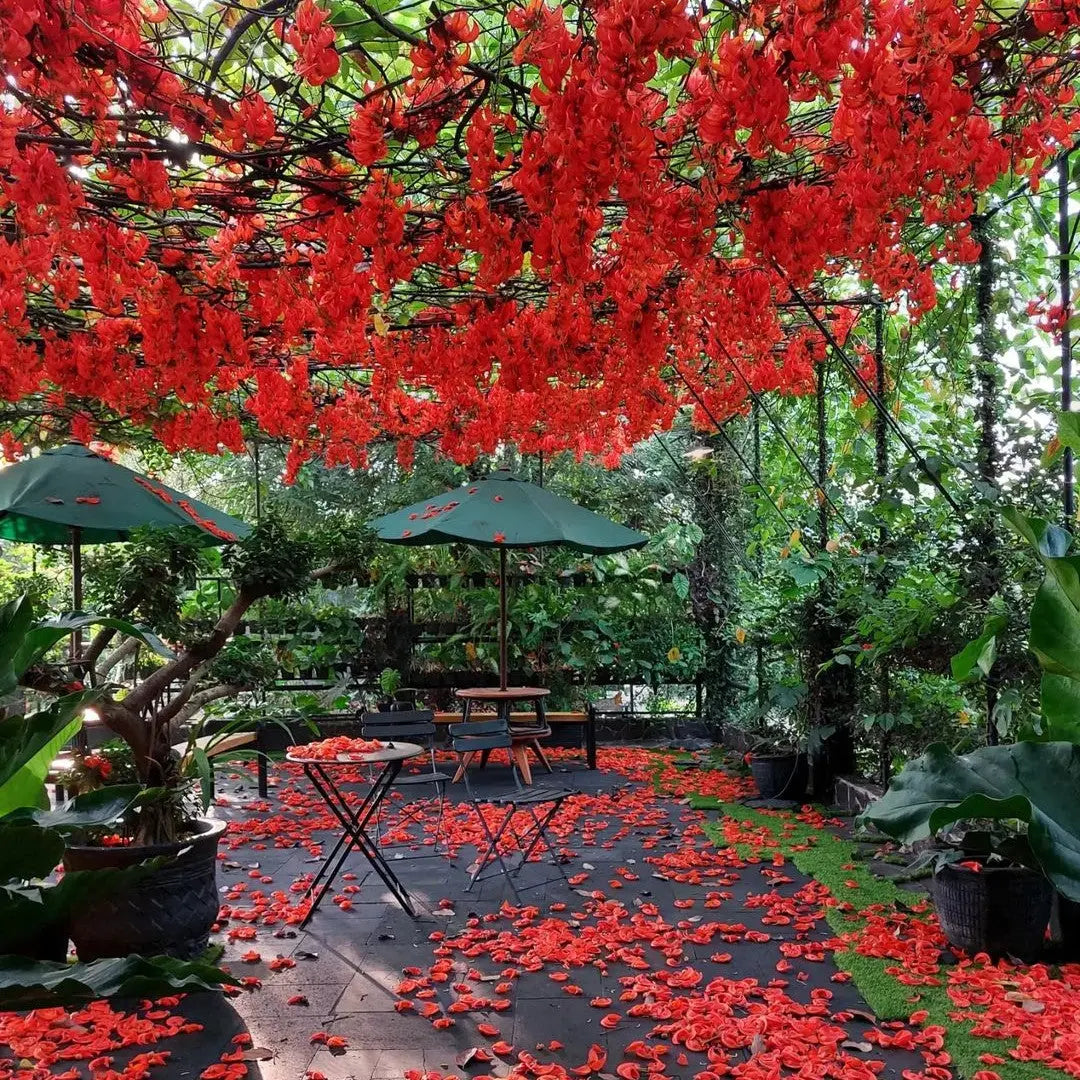
red jade plant Red Jade Vine (Mucuna Bennettii)There are spectacular flowering vines and then there is the Red Jade Vine (Mucuna bennettii). Native to the tropical rainforests of Papua New Guinea and distributed across the islands from Sulawesi to Vanuatu, it produces pendant racemes of fiery scarlet, claw shaped flowers that hang in chandelier like clusters up to 90120 cm long each raceme a cascade of dozens of vivid blooms that drip with nectar and attract birds from a distance. It is a
There are spectacular flowering vines — and then there is the Red Jade Vine (Mucuna bennettii). Native to the tropical rainforests of Papua New Guinea and distributed across the islands from Sulawesi to Vanuatu, it produces pendant racemes of fiery scarlet, claw-shaped flowers that hang in chandelier-like clusters up to 90–120 cm long — each raceme a cascade of dozens of vivid blooms that drip with nectar and attract birds from a distance. It is a vigorous, woody climber that grows fast and reaches impressive size, requiring a strong tree, pergola, or trellis to support it. In India's tropical and subtropical climate it is completely at home outdoors year-round — and a well-established vine in full flower is genuinely one of the most dramatic sights in the plant world.
Light
▾
Full sun to bright partial shade for the canopy — at least 6 hours of direct sunlight daily produces the most vigorous growth and flowering. South or west-facing open garden positions are ideal. Roots must be kept shaded at all times — see note above.
Watering
▾
Keep soil consistently moist during the growing season — water deeply 2–3 times a week in warm weather. Allow the top few centimetres to dry slightly between waterings; the vine tolerates brief dry spells but not prolonged drought. Mulch heavily to retain soil moisture and keep roots cool. Reduce watering in cooler months.
Humidity
▾
Moderate to high humidity preferred — thrives in India's tropical outdoor climate without intervention. For potted specimens in drier conditions, mist the foliage in the morning. Sensitive to cold dry air below 13°C — bring indoors or protect during cold spells.
Growing Media
▾
Deep, rich, well-draining organic soil. Mix 35% loamy garden soil, 35% well-rotted compost or FYM, 20% coarse sand or perlite, 10% coco coir. pH 6.0–7.5. For pots, use the largest container possible — at least 45–50 cm wide and deep. Mulch the surface 7–10 cm deep. In-ground planting is strongly preferred for mature plants.
Feeding
▾
Feed with a balanced or phosphorus-rich fertilizer (low nitrogen) every 6–8 weeks during the growing season. High nitrogen promotes excessive leaf growth at the direct expense of flowering — avoid it. Top-dress with well-rotted compost every 3 months. Stop feeding in winter.
Yellow Leaves
▾
The most common symptom — almost always caused by cold temperatures below 13°C or overheated, sun-exposed roots. Check temperature and ensure the root zone is shaded and mulched. Overwatering or poor drainage can also cause yellowing — check soil conditions.
Not Flowering
▾
Most likely causes: plant under 2 years old, roots in direct sun, too much nitrogen fertilizer, or insufficient light. Ensure roots are shaded and mulched, switch to a low-nitrogen bloom fertilizer, and ensure the canopy gets at least 6 hours of sun. Flowering peaks in autumn — patience through summer is essential.
Slow Growth
▾
Insufficient light, poor soil nutrition, or a pot that is too small. Move to a sunnier position, enrich the soil with compost, and ensure the container is large enough — or plant in-ground. This vine grows vigorously once established in the right conditions.
Leaf Drop
▾
Cold temperatures below 13°C cause rapid leaf drop. Protect from cold and bring potted plants indoors or under cover during cold spells. Resume normal care once temperatures stabilise above 15°C — new leaves will emerge.
Mealybugs or Spider Mites
▾
Inspect leaf undersides and stem joints. Spray thoroughly with diluted neem oil or insecticidal soap every 7–10 days for 3 weeks. Good air circulation and adequate watering reduce pest pressure significantly.
📋 Quick Plant Profile
| Botanical Name | Mucuna bennettii F.Muell. |
| Common Names | Red Jade Vine, New Guinea Creeper, Flame of the Forest |
| Family | Fabaceae (legume / pea family) |
| Origin | Papua New Guinea; Sulawesi to Vanuatu |
| Flower Description | Fiery scarlet, claw-shaped; pendant racemes 90–120 cm long; heavy nectar; attracts birds |
| Blooming Season | Autumn and winter; from year 2 onwards |
| Critical Rule | Canopy in full sun; roots must stay cool and shaded — mulch heavily |
| Light | Full sun to bright partial shade (canopy); roots shaded at all times |
| Watering | Consistently moist; 2–3 times a week in warm weather; mulch to retain moisture |
| Temperature | Above 13°C minimum; cold-sensitive; thrives in tropical and subtropical India |
| Mature Size | Large woody climber — 10–15 m at full maturity; needs strong support |
| Support Required | Large tree, strong pergola, or heavy-duty trellis — essential |
| Fertilizer Note | Low nitrogen — high nitrogen suppresses flowering |
| Pruning | Prune after flowering in early spring to encourage new growth |
| Ideal For | Tropical Gardens, Pergolas, Large Trees, Statement Climbers, Bird Gardens |
| Care Level | Intermediate — shaded roots and low nitrogen are the two key requirements |
Shipping Notes
- Free Standard Shipping on $100+ Orders to the USA.
- Except Preorder products are shipped in 48 hours.
- Delivery to the USA:
- Standard Shipping : 3-10 business days
- If time is of the essence, please consider selecting expedited delivery for faster service.
Exchange/Return Notes
- We offer a 30-day return/exchange service after receiving.
- Final sale items are not eligible for returns or exchanges.
- To process your return/exchange, please contact us at [email protected]
- Please click here for more details>>> Return & Exchange Policy