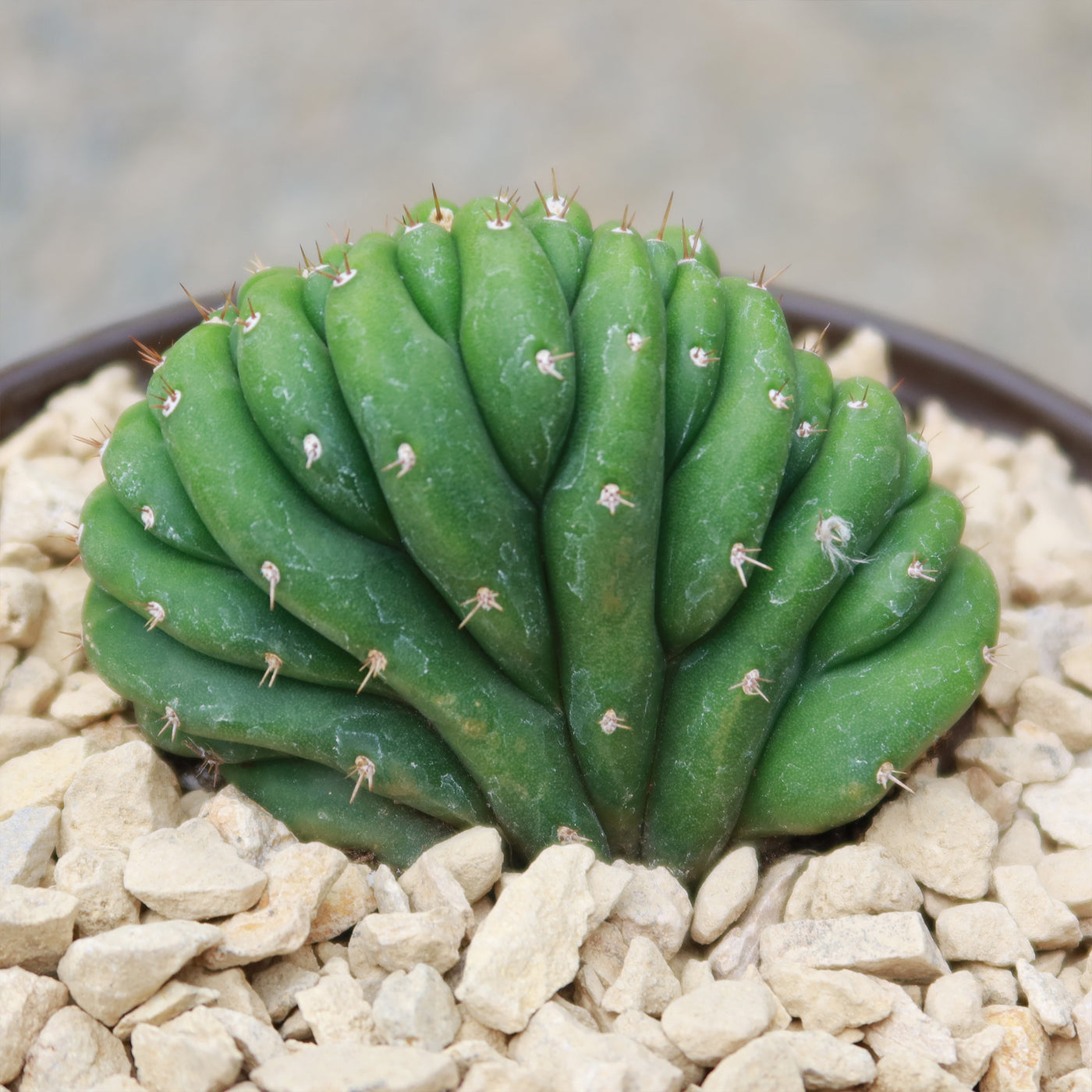
effects of san pedro cactus Crested San Pedro Cactus 'Echinopsis pachanoi cristata'
SKU: 14857416617
effects of san pedro cactus

effects of san pedro cactus Crested San Pedro Cactus 'Echinopsis pachanoi cristata'

Sale price$25.78 Regular price$28.64
Save 10%

Shipping Estimate
USA
  • USA
  • CAN

Ships within 48 hours · Estimated delivery Jul 6 - Jul 11

Promo Codes Available:

For Your Every Summer RSVP, with Code: SUMMER15

Description

effects of san pedro cactus Crested San Pedro Cactus 'Echinopsis pachanoi cristata'Introducing the crested San Pedro cactus, also known as Echinopsis pachanoi cristata (Trichocereus pachanoi cristata), is a unique and rare variety of Echinopsis pachanoi because of its crested growth pattern. This crested form adds an extra level of visual interest to this already stunning San Pedro. Native to the Andes Mountains in Peru and Ecuador, where it thrives in high altitudes and arid conditions, this extraordinary San Pedro cactus is a true

Introducing the crested San Pedro cactus, also known as Echinopsis pachanoi cristata (Trichocereus pachanoi cristata), is a unique and rare variety of Echinopsis pachanoi because of its crested growth pattern. This crested form adds an extra level of visual interest to this already stunning San Pedro. Native to the Andes Mountains in Peru and Ecuador, where it thrives in high altitudes and arid conditions, this extraordinary San Pedro cactus is a true sight to behold.  

This crested San Pedro cactus, which grows slowly, has a stunning fan-shaped stem that forms as a result of cristation. It can grow up to 3 feet tall and develops over time into jaw-dropping brain-like mounds, with the stem displaying vivid shades of green to bluish-green when it is young and dark green when it is ripe. It has whitish areoles that sprout up to seven spines ranging from dark yellow to light brown – talk about an edgy fashion statement! It also produced large white San Pedro cactus flowers during summer. 

San Pedro Crested is a unique and fascinating cactus variety that is highly sought after by collectors and enthusiasts. Propagating this Echinopsis plant can be done through various methods, such as grafting or taking San Pedro cactus cuttings from the crest. Additionally, it is a friendly plant for both pets and humans. It contains mescaline, an alkaloid that has tremendous healing potential and produces psychedelic effects. 

Watering Needs

The watering needs of the San Pedro crested cactus are similar to those of other cacti. It is important to remember that cacti are adapted to survive in arid environments with limited water availability. 

To keep your crested San Pedro cactus healthy, it is best to water it sparingly. Allow the soil to completely dry between waterings to avoid overwatering, which can cause root rot. During the growing season, typically spring and summer, you can water the cactus once every two to three weeks. In the dormant season, which is usually fall and winter, reduce watering frequency to once a month or even less. 

When watering, make sure to thoroughly saturate the soil, allowing the excess water to drain out completely. Avoid leaving the cactus sitting in standing water, as this can also lead to root rot in your Echinopsis pachanoi cristata. 

Light Requirements

The crested San Pedro cactus thrives in bright sunlight. It prefers to be placed in a location where it can receive at least six hours of direct sunlight each day. This cactus variety is adapted to high-altitude regions in Peru and Ecuador, where it is exposed to intense sunlight. 

When growing the San Pedro crested cactus indoors, it's important to place it near a sunny window or provide it with artificial grow lights that mimic natural sunlight. If you notice that your San Pedro cactus is stretching or leaning towards one side, it may be an indication that it is not receiving enough light and needs to be moved to a brighter location. 

However, it's important to avoid exposing this crested echinopsis to extreme temperatures, especially during the hottest part of the day. If you live in a region with scorching summers, it's a good idea to provide some shade or protect the cactus from intense afternoon sun. 

Optimal Soil & Fertilizer Needs

The San Pedro crested cactus requires well-drained soil to prevent root rot. To promote drainage, a suitable soil mix for this Echinopsis pachanoi can be a blend of cactus potting mix and perlite or pumice. Avoid using normal potting soil since it holds too much moisture. Planet Desert has got your back with our specialized cactus potting mix that includes 5 natural substrates with organic mycorrhizae – perfect for promoting healthy roots and happy plants.  

When it comes to fertilizing the San Pedro crested cactus, it's best to do so sparingly. During the growing season, you can fertilize the cactus once a month with a balanced, water-soluble cactus fertilizer. Overfertilizing can lead to excessive growth and may harm the San Pedro cactus. Remember, it's important to allow the cactus to rest during the dormant season, typically in fall and winter, and refrain from fertilizing during this time.  

Hardiness Zone & More

The San Pedro crested cactus is hardy in USDA hardiness zones 9-11. It can tolerate temperatures down to 20°F, but it's best to protect it from freezing temperatures. In terms of temperature preferences, this cactus San Pedro thrives in warm to hot conditions, ideally between 70-90°F. 

When it comes to humidity, the crested San Pedro cactus prefers low to moderate humidity levels. It can tolerate dry air, but it's important to provide some humidity during hot and dry periods, such as misting the cactus or placing a tray of water nearby. However, be cautious not to create excessively humid conditions, as it can lead to fungal issues. 

Overall, the San Pedro crested cactus is adaptable to a range of temperature conditions, but it's important to protect it from freezing temperatures and provide some humidity during dry periods to ensure its optimal growth and health. Be sure to add Echinopsis pachanoi Cristata – crested San Pedro cactus for sale to your collection today and elevate the beauty of your home or garden, with this stunning-looking plant. 

Shipping Notes
  • Free Standard Shipping on $100+ Orders to the USA.
  • Except Preorder products are shipped in 48 hours.
  • Delivery to the USA:
  1. Standard Shipping : 3-10 business days
  • If time is of the essence, please consider selecting expedited delivery for faster service.
Exchange/Return Notes
  • We offer a 30-day return/exchange service after receiving.
  • Final sale items are not eligible for returns or exchanges.
  • To process your return/exchange, please contact us at [email protected]
  • Please click here for more details>>> Return & Exchange Policy
SKU: 14857416617

Discover Niche Categories That Outsell effects of san pedro cactus

Top-Converting Item to Boost Your Average Order

4.7 ★★★★★
Based on 287 reviews
Sort
Highest Rating
Newest First
Oldest First
Product Reviews
M
Verified Purchase
MB
Natrona Heights, US
★★★★★ 5
A pastoral and prophetic epistle to the Western Church
Format: Paperback, Format: Paperback
I was so glad to read this book! Joash Thomas writes with an accessible blend of humor, vulnerability, and incisive observation as he reminds the Western Church of the inheritance of the saints across time and around the world. With pastoral sensitivity and prophetic courage, Joash brings the global heritage of the Church into the spotlight in a kind, clarifying, and convicting way. The book is structured in three parts: the first clears away some of the roadblocks to considering a justice-oriented lens, the second explores and illuminates the necessary work of decolonizing our doctrine and praxis, and the third invites readers to imagine an alternate path forward. I liked how the book is sprinkled with story-telling—both examples from global church history and story-telling ways churches today are prioritizing justice. I also found his idea for shifting "mission trips" to "vision trips" that see what God is already doing to be very provocative and hopeful. My favorite part of the book was the exposition on the Lord's Prayer. Each chapter ends with reflection questions, making this a great resource for a church small group or book study. *** A few of my favorite quotes: "One of the most beautiful, anti-colonial things about the Table is the way it visibly unifies all of us in Christ, regardless of socioeconomic status, race, gender, or politics. The Table is a rare place on earth where people who have nothing else in common suddenly find themselves reminded of how they hold the most important thing in common with each other, which is being united by the body and blood of Christ. The colonizer's gospel divides to conquer, but the gospel of Christ unites to heal. In a Western church that is highly divided on issues of theology, race, politics, and socioeconomics, the Table can be a physical place of healing and unification. Unless we learn to receive the body of Christ with our enemies at the Table (which requires allowing our theological and political enemies to participate at the Table with us), we will never know what it looks like to become the body of Christ for this broke world in need of healing." pg. 89 "Many Western Christians today are uncomfortable (and in many cases, even made fearful) by the idea of Christians living at peace and in the minority in a highly pluralistic society, even though this has been the reality for the vast majority of non-Western Christians around the world." pg. 109 "When we start prayer acknowledging that we're children of this heavenly Father, we are reminded that we are a part of a cosmic order much bigger than ourselves...When we ask God to give us our daily bread, we are asking God to give ALL his children their daily bread...God still takes the side of people in poverty and oppression because they have no one else who can advocate on their behalf. God's preferential option for the poor is not because of the goodness of people in poverty; it is because of the goodness of God." pg. 137-139 "In situations like this, we must set aside our desire for success (in this case, transforming the entire political climate of a nation) and prioritize faithfulness (doing what we can with what we have), even if this means we have to operate from the margins." pg. 158
WAS THIS REVIEW HELPFUL?YesReportShare
Reviewed in the United States on November 19, 2025
T
Verified Purchase
Tyler
Whiting, US
★★★★★ 5
Thoughtful, Challenging, Research-Based, and Compelling: Joash P. Thomas' "The Justice of Jesus"
Format: Paperback
I cannot recommend this book enough! Especially for Christian's actively involved in a church community. In The Justice of Jesus, Joash offers a compelling and challenging vision of what authentic, Christ-centered justice truly looks like. What I loved most about this book is how directly Joash engages with the reader to reflect on what justice means, what it looks like, and why that can sometimes be an uncomfortable topic, especially for White, Western Christians like myself; and Joash masterfully addresses the topic in a way that's sensitive yet direct and firm, allowing readers from all backgrounds to thoughtfully consider his argument without feeling targeted or turned off. I also really appreciate the quality of his evidence and argument, especially as it relates to anecdotal experience. He provides countless examples of Church communities engaged in the work of justice Jesus' way. There is so much I wish I could dive deeper into, but one of the key takeaways from this book that I appreciate is that, as hard and uncomfortable it can be to acknowledge, Christian's in the West (especially white) are deeply privileged and carry with them a colonized theology that's more often led to harm, oppression, and violence than it has to love, peace, and brotherhood. We've over emphasized the salvation of souls to the detriment of care for physical bodies, perfectly content to keep people in bondage so long as they say some magic words or profess belief. Joash rightly challenges this, calling on Western Christian's to 1) acknowledge their privilege and history of colonial conquest, 2) hold freedom of the body just as highly as salvation of the soul, 3) prioritize unity as beloved children of God over theological/liturgical differences, and 4) do the hard work necessary to address the harm our past has done (a task for which Joash provides many examples/suggestions) as we move forward as the Body of our Lord. Joash includes thoughtful reflection questions at the end of each chapter, making this the perfect book for a book group or study. I recommended it to the pastor of my church and look forward to engaging with it even more!
WAS THIS REVIEW HELPFUL?YesReportShare
Reviewed in the United States on February 2, 2026
M
Verified Purchase
M Summers
Carnegie, US
★★★★★ 5
Profoundly helpful!
Format: Paperback
I lead book studies centered on social justice and Joash’s work is powerful and refreshing! Fresh perspectives, practical tips, & convicting truths rooted in the Good News of Jesus. Each member of the study has said again and again how good this book has been! Thank you Joash!
WAS THIS REVIEW HELPFUL?YesReportShare
Reviewed in the United States on May 24, 2026
D
Verified Purchase
D. Griffin
Charlottesville, US
★★★★★ 5
Worthwhile read.
Format: Kindle
The first few chapters would perhaps been worth 10 stars the remaining chapters not so much although it was good information. It became a bit monotonous but all in all it’s still a five star book.
WAS THIS REVIEW HELPFUL?YesReportShare
Reviewed in the United States on April 28, 2026
J
Verified Purchase
James Parker
Lexington, US
★★★★★ 5
Open our eyes
Format: Paperback
I recently finished reading Joash's very insightful, inspirational, and encouraging book.  I hope it is read and implemented far and wide.  His interpretation of Jesus and "the church" is as close to the spirit of Scripture as I can find.  Twenty years ago, I read "Jesus and the Disinherited" by Howard Thurman that led me to places and situations and cultures and events which were not part of my own life's context. It was Jesus' context and I began to understand his lessons through his eyes instead of my own.  Joash, like Howard Thurman, is right - we colonized, Caucasian, Western civilization folks just don't get it.  But we should and we need to. Open your mind to read this book and see things through God's eyes. Thank you Joash!! We should all look for ways to extend this teaching to others. "...thy will be done, on Earth [all of earth and humanity] as it is [and will be] in Heaven.
WAS THIS REVIEW HELPFUL?YesReportShare
Reviewed in the United States on December 6, 2025

recommand products